Picture this: a designer stares at a blank screen, the cursor blinking like a ticking clock. The client needs a logo that’s both “playful and professional,” a concept that feels as contradictory as “quiet heavy metal.” This is the classic creative block, a moment every designer knows intimately. It’s not a lack of skill, but a mountain of possibilities with no clear path to the top.
Now, imagine that same designer typing a few of those conflicting words into a new tool. In seconds, a grid of images appears. One shows a sleek, modern briefcase with a whimsical, confetti-like pattern etched into its side. Another presents a geometric bird taking flight, its wings sharp and professional, its tail a flowing, colorful ribbon. The block is shattered. The ideas are flowing.
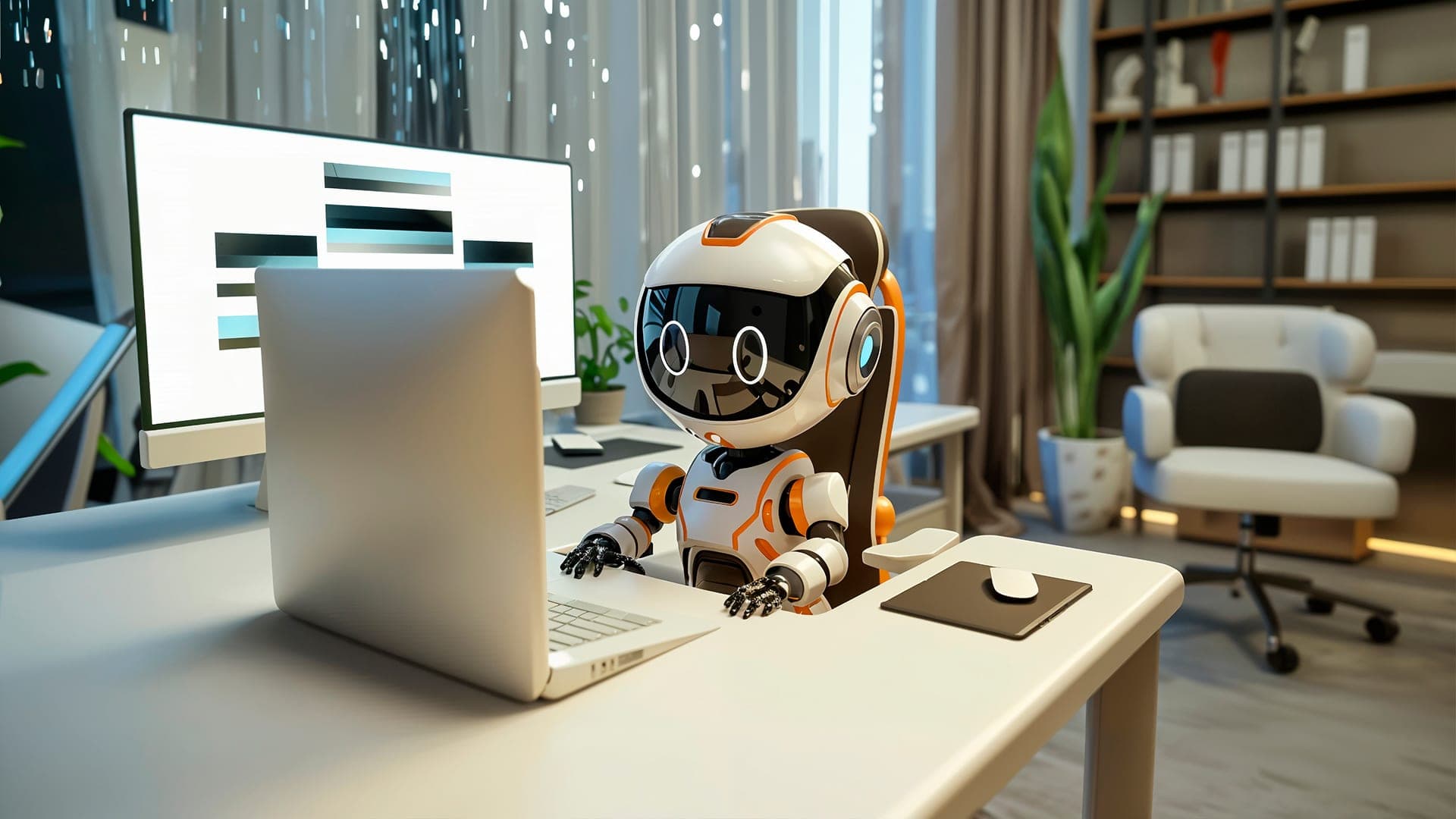
This is the real story of AI in creative design. It’s not about robots taking over; it’s about handing a powerful new sketchbook to the artist. The fusion of creative design and tech is creating a new kind of playground, and for businesses and designers willing to explore it, the results are transformative. This is not a future threat; it’s a present-day tool, reshaping how we think about the entire process of creative design and tech.
From Blank Canvas to Brainstorming Buddy
The most immediate impact of AI is at the very beginning: the ideation phase. Traditionally, this involved mood boards, endless Pinterest scrolling, and rough sketches. AI compresses this timeline from hours to seconds.
A designer can now use tools like Midjourney or DALL-E to generate hundreds of visual concepts based on a simple text prompt. Need a brand mascot that’s a “friendly robot made of vintage camera parts”? Or a color palette that evokes “a peaceful morning in a Japanese garden”? AI can produce a stunning array of starting points.
This is incredibly powerful for bridging the gap between a client’s vague feeling and a concrete visual direction. Instead of trying to describe a font, one can simply generate examples of “bold, friendly, rounded typography.” This collaborative spark between human intuition and machine execution is the new frontier of creative design and tech. It turns the daunting blank canvas into a conversation.
The Grunt Work is Gone: Freeing Up the Human Mind
Let’s be honest: not every part of a designer’s job is thrilling. Tasks like removing a background from 100 product images, resizing a banner ad for 12 different social media platforms, or generating slight variations of a design for A/B testing are tedious. They are necessary, but they drain creative energy.
This is where AI becomes a brilliant assistant. Tools within Adobe Photoshop can now remove objects and fill in backgrounds with almost magical accuracy. Platforms like Canva use AI to instantly resize designs. This automation is a gift. It frees up the designer’s most valuable asset—their time and strategic brain—for the work that truly requires a human touch: crafting the core concept, understanding the audience’s emotions, and ensuring the design tells a compelling story.
By handling the repetitive tasks, AI allows designers to focus on higher-level strategy and artistic refinement. This efficiency is a core benefit of integrating advanced creative design and tech.
A Real-World Example: The Local Bakery Rebrand
Consider “The Daily Loaf,” a small neighborhood bakery known for its artisan sourdough. Its branding was dated, and its social media presence was inconsistent. Hiring a large agency was out of budget.
The owner, Sarah, decided to explore AI-assisted design. She used an AI tool to generate logo concepts based on prompts like “warm bakery logo with wheat stalk and classic typography.” She received over 50 concepts in an hour. One, featuring a stylized loaf of bread that subtly incorporated a rising sun, immediately felt right.
She then used this AI-generated concept as a blueprint. She brought this vision to a freelance designer, who refined the shapes, perfected the color palette, and built a full brand guide around it. The AI didn’t do the final work, but it provided the perfect, cost-effective springboard, accelerating the project and ensuring the designer was executing a direction the client already loved.
Navigating the intersection of innovative tools and timeless design principles requires expertise. The technology is powerful, but it needs a strategic hand to guide it. For businesses looking to harness this potential, contact The Creative Unit (TCU). If you are looking for creative design services that blend human artistry with cutting-edge efficiency, our team is here to help you stand out.
The Invisible Partner: AI You Don’t Even See
AI’s role isn’t always about generating flashy images. Some of its most powerful applications are happening behind the scenes. For instance, data-driven AI can analyze how users interact with a website or app. It can identify that people consistently miss a crucial button or get stuck on a particular form.
Armed with this data, a designer can make informed decisions to improve the user experience (UX). The AI doesn’t design the new button, but it tells the designer exactly where and why a new button is needed. This marriage of analytics and aesthetics ensures that design choices are not just based on gut feeling, but on real user behavior, creating more effective and intuitive digital products.
The Irreplaceable Human Touch
With all this talk of AI’s power, it is crucial to state what it cannot do—and likely never will. AI models are trained on existing data; they are brilliant at remixing and recombining what has already been done. They lack consciousness, personal experience, and cultural context.
- Strategic Thinking: AI can generate a logo, but it cannot develop a full brand strategy that aligns with a company’s five-year business plan.
- Emotional Depth: It can create an image that looks sad, but it cannot infuse a design with the specific, nuanced melancholy of a personal memory.
- Cultural Nuance: It might misinterpret a cultural symbol, leading to an inappropriate or tone-deaf design.
- Authentic Storytelling: A brand’s unique story, its “why,” is something only humans can truly understand and translate into authentic visuals.
The designer’s role is evolving from being the sole creator to being the curator, the strategist, and the emotional guide. They are the ones who ask, “Why does this design feel right for this brand?” and “How will this make our audience feel?” The machine provides the options; the human provides the meaning.
A Collaborative Future
The future of design is not a choice between human and machine. It is a partnership. The most successful designers and agencies will be those who learn to co-create with AI, leveraging its speed and breadth while applying their own unique judgment, taste, and strategic insight.
This evolving partnership between creative design and tech promises a more dynamic, efficient, and innovative design process. It will allow for more personalized marketing materials, more user-friendly products, and a greater ability to test and refine ideas before a single final asset is produced.
Conclusion:
The Tool is in Your Hands
The arrival of AI in the design world is not an ending; it is a new beginning. It is like the invention of the paint tube, which allowed Impressionist painters to leave the studio and paint in the open air, or the arrival of digital design software, which revolutionized typography and layout.
It is a powerful new tool, waiting to be mastered. For businesses and creators, the message is clear: the future belongs not to those who fear the new technology, but to those who are curious enough to pick it up, learn its language, and use it to enhance their own unique, irreplaceable human creativity. The canvas is no longer blank; it is now a collaborative space, buzzing with potential.