

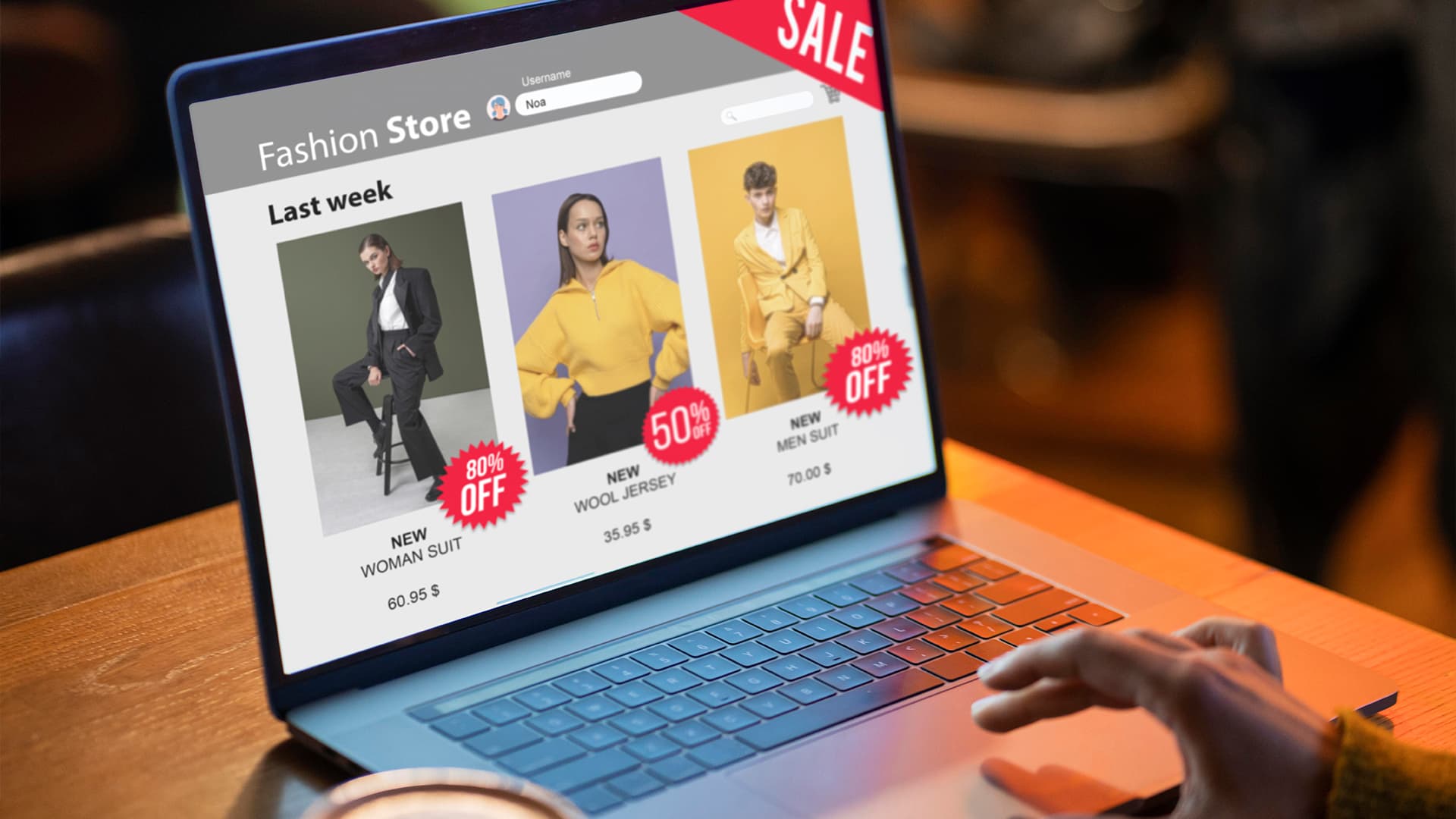
An ecommerce store can attract thousands of visitors and still struggle to generate consistent sales. The products may be competitive, the advertising may be working, and the prices may be reasonable, yet customers leave without buying. In many cases, the problem is not the product. It is the experience surrounding the product.
Professional ecommerce website design services improve more than the appearance of an online store. They shape how quickly shoppers understand the offer, how easily they find the right item, how confident they feel about purchasing, and whether they complete the checkout process.
Design influences every step between interest and payment. A confusing category structure can hide good products. Weak product pages can create doubt. A slow mobile experience can frustrate ready-to-buy customers. Even a poorly positioned shipping message can cause hesitation at the final step.
The goal of ecommerce design is therefore not simply to make a website look modern. It is to remove the obstacles that prevent interested visitors from becoming paying customers.
How Does Ecommerce Website Design Affect Sales?
Ecommerce website design affects sales by improving product discovery, reducing uncertainty, strengthening trust, and simplifying the path to purchase.
Customers rarely evaluate an online store one element at a time. They respond to the complete experience. Navigation, typography, product photography, page speed, filtering, pricing information, mobile responsiveness, delivery details, reviews, payment options, and checkout design all contribute to the customer’s decision.
A strong ecommerce experience answers four questions quickly:
- Am I in the right place?
- Can I find the product I need?
- Can I trust this business and this product?
- Can I complete the purchase without unnecessary effort?
When a website fails to answer one of these questions, shoppers hesitate. When it fails to answer several, they leave.
Product Sales Often Depend on What Happens Before the Product Page
Many businesses focus heavily on product page design while overlooking the journey customers take to reach those pages. This is a costly mistake.
A shopper may enter through the homepage, a search result, an advertisement, a category page, a social media post, or a direct product link. Each entry point creates a different level of awareness and intent. The website must help that person understand where to go next.
Clear navigation reduces shopping effort
Navigation should reflect how customers think about products, not how the company organizes inventory internally.
For example, a clothing brand may divide its internal stock by supplier, season, warehouse, or production batch. Customers are more likely to browse by product type, size, activity, gender, color, occasion, or price.
Good navigation uses familiar language and limits unnecessary choices. It also provides clear routes back to broader categories, allowing shoppers to explore without feeling trapped.
For larger catalogs, useful navigation may include:
- Search with relevant product suggestions
- Filters for price, size, color, availability, rating, or specifications
- Sorting by popularity, newest arrivals, price, or relevance
- Breadcrumb navigation
- Recently viewed products
- Related category recommendations
These features are not decorative conveniences. They reduce the mental effort required to shop.
Search should understand buying intent
A basic search bar that only recognizes exact product names is rarely enough for a growing ecommerce store.
Customers may search using informal terms, product features, model numbers, abbreviations, common misspellings, or problems they want to solve. A strong search experience should interpret these variations and return useful results.
When search produces irrelevant items or a blank results page, the customer may assume the store does not carry what they need. A well-designed zero-results page can instead recommend related categories, alternative keywords, popular products, or customer support.
Design Builds Trust Before Customers Read the Details
Online shoppers cannot physically examine a product, speak to an employee, or immediately verify the quality of the business. They depend on design cues to judge credibility.
Trust is influenced by visual consistency, clear policies, accurate product information, secure payment indicators, customer reviews, recognizable contact information, and professional brand presentation.
This does not mean every store needs an elaborate visual style. In fact, overly complex design can distract from the products. Customers usually respond better to clarity, consistency, and confidence than to unnecessary animation or creative experimentation.
A polished brand system should use consistent colors, typography, photography, buttons, icons, and messaging across the website. When these elements appear disconnected, the store can feel unfinished or unreliable.
Businesses that need a stronger visual and technical foundation can work with website design and development team to align the storefront with the company’s brand, customer journey, and commercial goals.
Better Product Pages Reduce Buying Uncertainty
A product page is not simply a digital shelf. It is a sales environment that must replace much of the reassurance a customer would normally receive in person.
The strongest product pages make the offer easy to understand without forcing shoppers to search for essential information.
Product visuals should support evaluation
High-quality images help customers inspect materials, proportions, finishes, packaging, dimensions, and use cases. Depending on the product, useful visual content may include:
- Multiple product angles
- Close-up detail shots
- Lifestyle photography
- Product demonstration videos
- Scale references
- Size charts
- Color or style variations
- User-generated images
Visual content should be optimized for speed without appearing blurred or heavily compressed. Image zoom should work smoothly, particularly for fashion, furniture, electronics, beauty, jewelry, and other detail-sensitive products.
Product copy should answer practical questions
Generic product descriptions often repeat information that customers can already see. Strong product copy explains why the item matters, who it is for, how it works, and what the buyer should expect.
A useful product description may address:
- The primary benefit
- Materials or ingredients
- Dimensions and weight
- Compatibility
- Care instructions
- Warranty information
- Delivery expectations
- Return eligibility
- What is included
- Differences between available options
The most important information should be visible before customers need to open several tabs or expandable sections.
Calls to action need context
A large “Add to Cart” button is not enough when the surrounding page creates uncertainty.
The area around the purchase button should confirm the selected size, color, quantity, availability, price, estimated delivery, payment options, and any relevant return conditions. Error messages should explain exactly what the customer needs to correct.
Effective UI/UX design makes the next action visually clear while keeping supporting information close enough to reduce hesitation.
Mobile Design Is a Sales Requirement, Not a Smaller Desktop Layout
Mobile-first design requires more than resizing desktop content. It involves reconsidering how people browse, compare, and purchase on smaller screens.
Mobile shoppers use touch controls, may have slower connections, and are more likely to be distracted. They need readable text, comfortable button sizes, simple menus, fast-loading media, concise forms, and predictable page behavior.
Common mobile problems include:
- Navigation menus with too many levels
- Filters that are difficult to open or clear
- Product images that dominate the entire screen
- Pop-ups that cover important content
- Buttons placed too close together
- Checkout forms that require excessive typing
- Layout shifts while images or banners load
- Payment options that do not work smoothly on mobile devices
A mobile store should make critical information easy to reach with one hand. Sticky purchase buttons can help on longer product pages, but they should not block content. Filters should show selected options clearly. Form fields should use the correct mobile keyboard for email addresses, phone numbers, and payment details.
Responsive design is not only a technical requirement. It directly affects whether customers remain engaged long enough to buy.
Checkout Design Determines Whether Intent Becomes Revenue
A customer who reaches the cart has shown meaningful buying intent, but the sale is not complete. The cart and checkout process must preserve momentum.
Unexpected costs are among the most damaging checkout problems. Shipping fees, taxes, service charges, or delivery restrictions should not appear without warning at the final step.
A well-designed cart should clearly display:
- Selected items and variants
- Quantity controls
- Individual and total prices
- Estimated shipping information
- Promotion code fields
- Stock or availability notices
- A clear route back to shopping
- A prominent checkout action
During checkout, businesses should request only the information needed to process the order. Mandatory account creation can create resistance, especially for first-time customers. Guest checkout, express payment methods, address autocomplete, clear validation, and visible progress indicators can reduce abandonment.
Payment gateways must also match the target market. Depending on the business and location, customers may expect credit cards, digital wallets, local payment providers, bank transfers, buy-now-pay-later options, or cash-on-delivery support.
This is where thoughtful design and reliable ecommerce development must work together. A visually clean checkout is ineffective when payment integrations fail, inventory is inaccurate, or confirmation messages are delayed.
Website Speed Influences Both Visibility and Conversion
Customers do not separate performance from design. A page that looks polished but loads slowly still creates a poor experience.
Large images, unnecessary scripts, poorly configured apps, unoptimized fonts, complex animations, and excessive third-party tracking can make ecommerce websites sluggish. Slow performance becomes especially noticeable on category pages and product pages containing many images.
Developers should monitor Core Web Vitals and other performance indicators while evaluating the complete shopping journey. Important areas include:
- Largest Contentful Paint
- Interaction to Next Paint
- Cumulative Layout Shift
- Server response time
- Image loading behavior
- JavaScript execution
- Mobile performance
- Cart and checkout responsiveness
Performance work may involve image compression, modern image formats, lazy loading, caching, content delivery networks, code splitting, database optimization, and reducing unnecessary third-party tools.
Speed should be considered during the design and development process rather than treated as a final technical cleanup task.
Choosing the Right Ecommerce Platform Protects Future Growth
Platform selection affects design flexibility, operating costs, integrations, maintenance, security, and the ability to scale.
There is no single best platform for every business. The right option depends on catalog size, internal resources, regional requirements, expected order volume, customization needs, content strategy, integrations, and long-term growth plans.
| Platform approach | Often suitable for | Important consideration |
| Shopify | D2C brands, startups, and growing retailers | Easy management and strong app ecosystem, but advanced customization can increase costs |
| WooCommerce | Content-led businesses and WordPress users | Flexible and familiar, but performance and plugin management require attention |
| Magento or Adobe Commerce | Large catalogs and complex enterprise operations | Powerful capabilities, but requires experienced technical management |
| Custom React or Next.js storefront | Brands needing advanced speed, flexibility, or custom customer journeys | Greater control, but higher development and maintenance requirements |
| Headless commerce | Businesses connecting multiple channels and systems | Strong flexibility, but architecture and integrations must be planned carefully |
Before choosing a platform, decision-makers should document their operational requirements. These may include CRM connections, enterprise resource planning systems, inventory management, shipping providers, tax calculation, subscriptions, loyalty programs, marketplaces, multilingual content, multi-currency pricing, wholesale accounts, and customer portals.
Experienced ecommerce website design services should evaluate these business requirements before recommending a design direction or technology stack.
Branding Helps Products Compete Beyond Price
When several stores sell similar products, customers often choose based on trust, relevance, convenience, and emotional connection rather than price alone.
Brand identity influences how customers interpret product quality and company credibility. Typography can make a brand feel premium, approachable, technical, playful, or established. Photography can communicate lifestyle and audience. Brand voice can make product information feel clearer and more distinctive.
However, branding should never make shopping harder. Creative visual decisions still need to support readability, accessibility, navigation, and conversion.
The strongest ecommerce brands build recognizable systems rather than decorating individual pages. Product cards, email campaigns, packaging, paid advertisements, social media content, and the website should feel connected.
This consistency is especially important for D2C brands that depend on repeat purchasing and customer loyalty.
Website Design and Ecommerce Marketing Must Support the Same Journey
A website cannot be designed separately from the traffic sources that feed it.
A customer clicking a Google Shopping advertisement may be ready to compare specifications and price. Someone arriving through Instagram may need more brand context. A visitor from an educational blog may still be researching the problem. A returning email subscriber may be looking for a particular promotion.
Effective ecommerce marketing aligns advertisements, landing pages, product pages, offers, and follow-up communication. The message presented before the click should continue after the visitor reaches the website.
For example, an advertisement promoting free delivery should not send visitors to a homepage where the offer is difficult to find. A campaign focused on one product category should direct customers to a relevant collection or landing page, not force them to restart their search.
Analytics tools such as Google Analytics, Google Search Console, advertising platforms, heatmaps, and customer relationship management systems can help teams understand how different audiences behave. Digital marketing services can support businesses that need to connect website experience with SEO, paid campaigns, content, lead generation, and customer acquisition.
Common Ecommerce Design Mistakes That Limit Sales
Many conversion problems are created by small decisions that accumulate across the customer journey.
Designing for the business instead of the customer
Internal teams may understand product names, category structures, and industry terminology that are unfamiliar to customers. Navigation and content should be tested with real users rather than approved only by people inside the company.
Copying competitors too closely
Competitor research can reveal common customer expectations, but copying another store’s structure does not guarantee similar performance. Different brands have different audiences, traffic sources, product margins, and operational capabilities.
Adding features without a clear purpose
Wish lists, product quizzes, chat tools, loyalty programs, pop-ups, recommendation engines, and interactive content can be useful. They can also create clutter, increase costs, and slow the website. Each feature should solve a defined customer or business problem.
Hiding essential information
Shipping, returns, availability, sizing, warranties, and delivery expectations should not be buried. Customers are more likely to proceed when they understand the conditions of the purchase.
Treating launch as the end of the project
Customer behavior changes. New products are added. Marketing campaigns attract different audiences. Technical issues emerge. Ecommerce websites require ongoing testing, maintenance, content improvement, and performance monitoring.
How Should Businesses Measure Design Performance?
A redesigned store should be evaluated using business outcomes, not personal opinions about the new appearance.
Useful metrics include:
- Conversion rate
- Add-to-cart rate
- Cart abandonment rate
- Checkout completion rate
- Revenue per visitor
- Average order value
- Product page engagement
- Search usage and search exits
- Mobile conversion performance
- Repeat purchase rate
- Return rate
- Customer support questions
- Page speed and Core Web Vitals
Conversion rate alone does not explain the full story. A design change may improve average order value while slightly reducing the number of low-value orders. A product page may generate more purchases but also increase returns because sizing information is unclear.
Teams should combine analytics with customer feedback, usability testing, support conversations, session recordings, and sales data. This creates a more accurate picture of where customers struggle and which improvements are likely to produce meaningful results.
What Should You Look for in an Ecommerce Design Partner?
A capable ecommerce partner should understand commercial strategy, user behavior, technology, branding, and post-launch growth.
Before selecting a vendor, ask how the team approaches:
- Customer research and user journeys
- Information architecture and wireframes
- Mobile-first design
- Product and category page planning
- Platform selection
- Payment and API integrations
- SEO and crawlability
- Core Web Vitals
- Accessibility
- Analytics and conversion tracking
- Quality assurance
- Security and maintenance
- Post-launch optimization
Review completed work, but do not judge the partner only by visual style. Ask what problems each project solved and how design decisions connected to the client’s goals. TCU’s portfolio provides examples of the company’s work across design, development, branding, and digital experiences.
A good partner should also be willing to challenge unnecessary features, unrealistic timelines, and technology choices that do not fit the business.
Turn the Storefront Into a Stronger Sales System
A successful ecommerce website brings design, development, branding, product content, marketing, analytics, and operations into one connected experience.
Businesses considering professional ecommerce website design services should begin with the problems customers are experiencing rather than a list of visual changes. The most valuable improvements are often clearer navigation, stronger product information, faster mobile performance, simpler checkout steps, and more reliable technical integrations.
Conclusion
Ecommerce sales are shaped by far more than product quality or advertising spend. Customers also evaluate how easy the store is to use, how trustworthy the business appears, how clearly products are explained, and how much effort is required to complete a purchase.
Strong ecommerce design removes friction from the full customer journey. It helps visitors move from discovery to evaluation, from evaluation to confidence, and from confidence to checkout. It also gives internal teams a more reliable system for managing products, campaigns, customer data, and future growth.
The most effective websites are not designed around visual trends alone. They are built around customer needs, commercial priorities, technical realities, and measurable business outcomes.
Need help turning an underperforming store into a clearer, faster, and more conversion-ready shopping experience? Contact The Creative Unit to discuss ecommerce design, development, user experience, and digital growth support aligned with your products and business goals.
Frequently Asked Questions
What is ecommerce website design?
Ecommerce website design is the process of planning and creating an online shopping experience that helps customers discover, evaluate, and purchase products. It includes visual design, navigation, product pages, responsive layouts, checkout flow, accessibility, and conversion-focused user experience.
Can better website design increase ecommerce sales?
Yes, better design can increase sales by reducing confusion, building trust, improving product discovery, and making checkout easier. Results depend on the quality of the products, traffic, pricing, fulfillment, marketing, and technical performance as well as design.
How much do ecommerce website design services cost?
The cost of ecommerce website design services depends on catalog size, platform, custom features, integrations, branding requirements, content needs, and technical complexity. A small Shopify store and a custom enterprise ecommerce platform require very different levels of strategy, design, and development.
Which ecommerce platform is best for a growing business?
Shopify is often suitable for brands that value ease of management, while WooCommerce can work well for WordPress-based businesses. Magento, headless commerce, or custom platforms may be more appropriate for large catalogs, complex integrations, wholesale operations, or advanced customer experiences.
What is the difference between ecommerce design and ecommerce development?
Ecommerce design focuses on structure, visual presentation, user journeys, product discovery, and interaction. Ecommerce development turns those plans into a functioning store by building templates, databases, integrations, payment systems, account features, and administrative tools.
Why is UI/UX important for an online store?
UI/UX design helps customers understand the interface, find products, compare options, and complete tasks with less effort. It also improves accessibility, mobile usability, consistency, and confidence throughout the buying process.
How often should an ecommerce website be redesigned?
There is no fixed schedule. A redesign may be needed when the store no longer reflects the brand, performs poorly on mobile devices, loads slowly, is difficult to manage, cannot support required integrations, or creates repeated customer complaints. Smaller continuous improvements are often more effective than waiting years for a complete redesign.