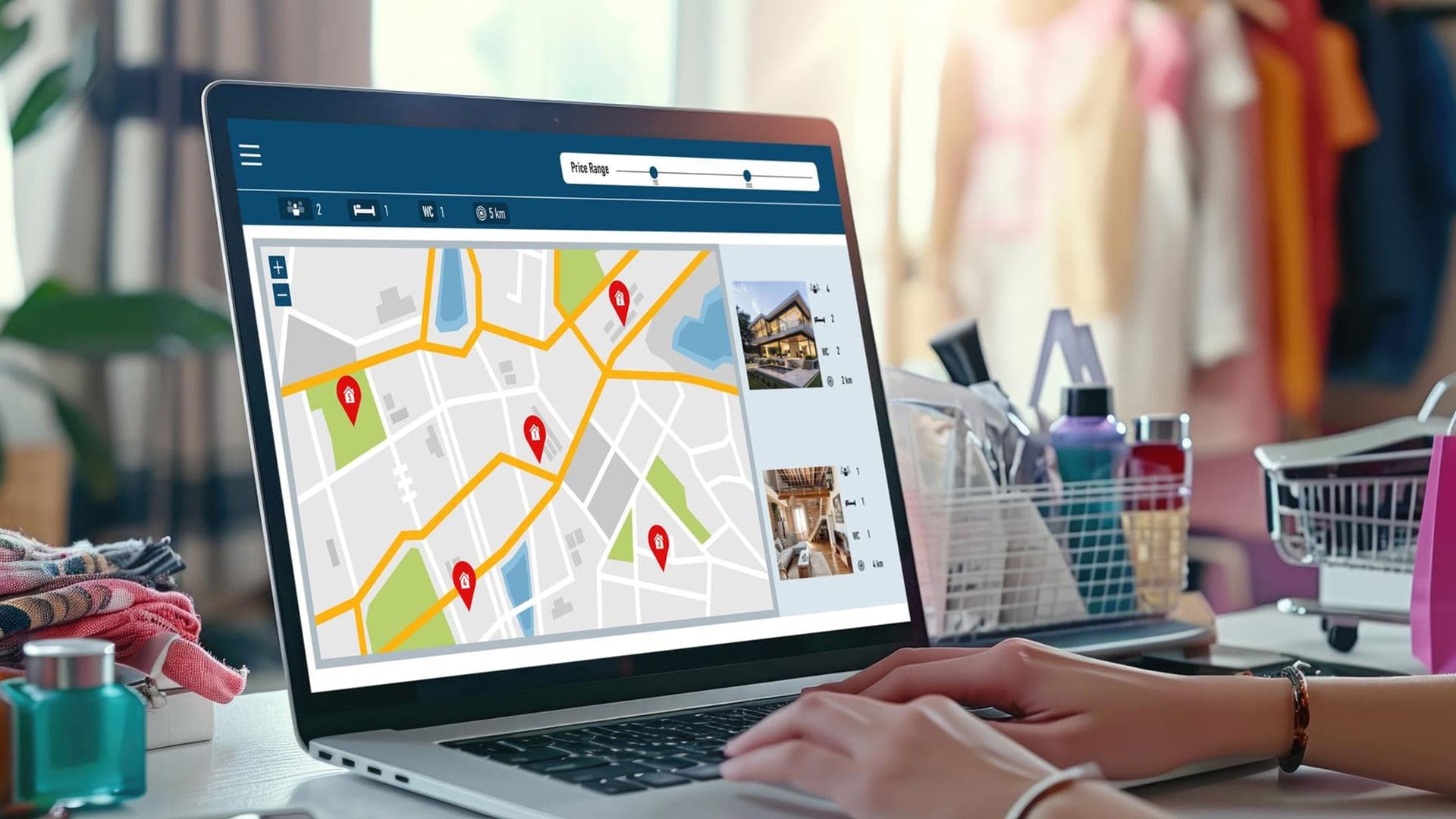
Think about the last time you searched for something local. A dentist. A salon. A mechanic. A “coffee near me” situation where you were already halfway out the door. You probably didn’t open ten websites and read long pages. You checked the map, scanned a few options, looked at reviews, and picked the one that felt like the safest choice.
That is the local buying journey now. It happens fast, and a big part of it happens inside Google Maps.
This is exactly why Google Maps SEO services matter. Not as a catchphrase, but as a practical way to get into the shortlist and win the click when people are ready to act.
How People Actually Buy Locally Now
Local customers are not “browsing.” They’re usually trying to solve a problem quickly. The journey is short, and the decisions are based on a few visible signals.
The “near me” moment
Most local searches start with a simple intent: “I need this, close to me.” Even when someone searches without typing “near me,” Google understands local intent if the service is location-based.
At this point, customers want:
- Nearby options
- Open hours that match reality
- A business that looks legitimate
The quick trust scan
This is the part many businesses underestimate. Customers do a fast scan that looks something like this:
- Rating and review count
- Recent reviews, not just old ones
- Photos that feel real
- Category match (does this place actually do what I need?)
- Whether it’s open right now
- How easy it looks to call, message, or book
If your listing looks incomplete, outdated, or confusing, you can lose the click even if you show up.
Maps Rankings Are Not Only About Ranking
Being visible is step one. Winning the click is step two.
A lot of businesses focus only on “How do we get into the top 3?” and forget that Maps is also a conversion screen. People can call, request directions, read reviews, and make decisions without touching your website.
So a strong Maps strategy is usually two parts:
- Get seen
- Get chosen
That’s the difference between “we rank” and “we get leads.”
What Google Uses To Decide Who Shows Up
Google’s Maps results are influenced by many signals, but most of them fall into three buckets: relevance, distance, and prominence.
Relevance
Relevance is how closely your listing matches the search. This is influenced by your categories, services, business description, and supporting signals like your website content.
A simple example: if someone searches “emergency plumber,” a listing that clearly reflects plumbing services and emergency availability has a better relevance match than a listing that says “home services” with vague offerings.
Distance
Distance is about proximity to the searcher or to the location named in the search. You can’t “optimize” distance in the traditional sense, but you can avoid location confusion that hurts trust.
For example: the wrong pin, inconsistent address info across directories, or a service-area setup that doesn’t match how you actually operate.
Prominence
Prominence is Google’s way of measuring credibility and authority. Reviews, citations, local links, and strong web signals all contribute.
Prominence is also where consistency matters. One good month won’t always move the needle. A steady pattern will.
Here’s a practical way to think about it:
| Factor | What it means | What helps most |
| Relevance | “Are you the right match?” | Accurate categories, services, content |
| Distance | “Are you nearby?” | Correct location signals, clear service area |
| Prominence | “Are you trusted?” | Reviews, consistent listings, local authority |
This is the foundation behind Google Maps SEO services when done properly. It’s not one trick. It’s a full alignment job.
The Buying Journey Inside Maps, Step By Step
Instead of treating Maps like “a place to rank,” it helps to treat it like a mini sales funnel. People move through steps, and each step has different decision triggers.
Step 1: Discovery
The customer sees a few listings. At this stage, they notice:
- Name and category
- Rating
- Distance
- “Open now”
- A quick glance at photos
If the listing doesn’t look relevant and active, it gets skipped.
Step 2: Shortlist
Now the customer taps 2–5 listings and compares. They check:
- Review themes and recent review dates
- Photo quality and variety
- Services list
- Pricing hints inside reviews (even if you don’t show pricing directly)
Step 3: Trust check
This is where the buyer decides if you feel reliable:
- Do reviews sound real and specific?
- Are there responses from the owner?
- Does the listing info look consistent and maintained?
- Are there any red flags like wrong hours or confusing location info?
Step 4: Action
This is where the money is:
- Calls
- Messages
- Directions
- Booking clicks
- Website taps
To show how this works, here’s a clear mapping:
| Journey stage | What the customer wants | What should support it |
| Discovery | Quick relevance | Right categories, strong headline signals |
| Shortlist | Comparison | Reviews, photos, service clarity |
| Trust check | Confidence | Owner responses, consistency, freshness |
| Action | Low friction | Call buttons, booking, accurate hours |
If your listing is strong in one stage and weak in another, you leak customers. That’s why Google Maps SEO services should include both ranking improvements and listing conversion improvements.
The Listing Setup Details That Quietly Decide Clicks
Many businesses “set up” their Google Business Profile once and leave it. That’s usually a mistake, especially in competitive areas.
Categories that match real searches
Your primary category matters a lot. Secondary categories help when they are accurate, but adding irrelevant ones can dilute relevance.
A clean approach:
- Choose a primary category that reflects your main revenue service
- Add secondary categories only if you actually provide those services
- Align your services list with what customers search, using plain language
Services and descriptions that are easy to understand
A common problem is service lists written for the business owner, not the customer. The customer wants simple clarity.
Good service wording is:
- Specific
- Familiar
- Not full of internal jargon
Photos that feel real
Photos influence trust more than people admit. The goal is not “pretty.” The goal is “believable.”
A good photo mix usually includes:
- Exterior photo that helps customers recognize the location
- Team or workspace photos (simple, real)
- Proof of work (before-after if appropriate for the industry)
- Updated photos every month or so, even if it’s a small update
A listing with fresh photos often looks more active, which affects both trust and engagement.
If your Maps visibility is stuck, or you’re getting impressions but not calls, it usually means the listing needs both ranking work and conversion cleanup. Contact TCU for Google Maps SEO services that improve profile relevance, build trust signals, and track actions like calls and direction requests. This can sit inside broader digital marketing services when the goal is steady local leads, not just better positioning.
Reviews: The Biggest Trust Lever In The Local Journey
Reviews are both a ranking signal and a decision signal. People don’t only look at the star rating. They look for patterns.
What buyers read in reviews
Most buyers skim for:
- Recent experiences
- Mentions of reliability, timing, and professionalism
- Consistency across multiple reviews
- How problems were handled when something went wrong
How to request reviews without making it awkward
The best approach is simple and consistent. Ask when the customer is happiest, usually right after the service is delivered and the outcome is clear.
Light review request options that work:
- A short text message with a direct review link
- A simple follow-up email
- A small reminder at the end of the service conversation
Avoid bribes, rewards, or anything that looks unnatural. The safest long-term strategy is steady, ethical review collection.
Responding to reviews like a real business
Responses don’t need to be long. They just need to sound human and specific.
Here’s a simple response guide:
| Review type | What to include | What to avoid |
| Positive | Thanks plus a small detail | Copy-paste replies |
| Neutral | Acknowledge, offer help | Blaming the customer |
| Negative | Calm apology, next step, take offline | Public arguments |
Replying consistently also signals that the business is active. Customers notice that more than they admit.
Your Website Still Supports Maps More Than You Think
Even if customers decide inside Maps, your website still feeds credibility signals and often helps with prominence.
Local pages that do not feel spammy
If you serve multiple locations, having local pages can help, but they must be useful. Thin pages with the city name swapped do not build trust.
A strong local page usually has:
- Real service details for that area
- Clear contact options
- Simple proof like testimonials or project examples
- Fast load speed on mobile
This is where website design and development and UI UX design services play a role. If your site is slow or confusing on mobile, you lose the customer right after they tap from Maps.
Consistency across the site and the listing
Your name, address, and phone number should match your Google listing. Mismatches create friction and reduce trust.
Local Signals Outside Google That Still Matter
Maps rankings don’t exist in isolation. Google cross-references the web.
Citations and consistent business information
Your business info should appear consistently across reputable directories. Inconsistent information confuses both Google and customers.
A simple consistency checklist:
- Same business name format everywhere
- Same address formatting
- Same primary phone number
- Same website URL used consistently
Local mentions and local links
Local authority builds when the business appears in real local places:
- Local news sites
- Community organizations
- Sponsorship pages
- Industry associations
- Legit local directories
This is slower than shortcuts, but it tends to last.
Common Ranking Roadblocks and What Usually Fixes Them
Businesses often ask, “Why are we not showing up even though our profile looks fine?” The answer is usually one of these.
Category mismatch
If your primary category is slightly off, you can miss relevant searches. Fixing category alignment can create movement faster than many people expect.
Low review freshness
You might have a decent rating, but if most reviews are old, the listing can feel inactive. Buyers notice that, and Google notices engagement patterns too.
Weak prominence in a competitive area
In competitive cities, everyone has a good listing. Prominence becomes the separator. This is where consistent reviews, strong local mentions, and website support matter.
Conversion leaks inside the listing
Sometimes the listing ranks, but doesn’t convert:
- Photos are outdated
- Services are unclear
- Hours are wrong
- No responses to reviews
- Messaging or booking is missing when competitors offer it
Maps is not only about ranking higher. It’s also about looking like the best choice.
Multi-Location and Service-Area Businesses
These business types often have the most confusion, so they deserve a clear section.
Multi-location businesses
Each location needs its own strong profile, with:
- Unique photos
- Location-specific reviews
- Accurate hours
- Correct pin placement
Trying to copy the same content across locations usually makes them feel generic.
Service-area businesses
Service-area businesses must be careful with address and service area settings. The goal is clarity: where you serve, how you serve, and how customers should contact you.
This is also where the local journey matters most. Customers want quick reassurance: “Yes, they serve my area and can handle my issue.”
Conclusion
Google Maps rankings influence who gets considered. The local buying journey decides who gets chosen.
When your listing is relevant, active, and trustworthy, customers move from discovery to action quickly. When it’s vague or outdated, they bounce, even if you technically appear.
If the goal is consistent local leads, Google Maps SEO services should support the full journey: profile setup, review momentum, strong local signals, website support, and tracking that connects Maps activity to real calls and bookings.
Local customers are already searching. The real question is whether your listing earns their confidence when they find you.